Australia New Zealand School of Government National Regulators Community of Practice Conference 2025

Image

This event presents an opportunity for representatives from State and Territory regulators to come together and discuss the current state and future direction of the regulatory space. This year's theme is ‘Regulation 2025 to 2050: Disruption, change and continuity’, and it will provide the QBCC with a forum to showcase our regulatory approach to industry and stakeholders.

Event details
Date
27 Aug 2025
Time
09:00am - 05:00pm
Location
Brisbane Convention & Exhibition Centre, Cnr Merivale Street and Grey Street, South Brisbane
Cost
Free

Bunnings Trade Expo—Gold Coast

Image
home-owner-events

The Bunnings Trade Expo at the Gold Coast showcases the latest products, tools, and services tailored for construction and trade professionals. It’s a great opportunity to connect with industry experts, discover innovative solutions, and stay ahead in the building game.

Event details
Date
31 Jul 2025
Time
12:00pm - 08:00pm
Location
Gold Coast Convention And Exhibition Centre, 2684 -2690 Gold Coast Highway
Cost
Free

Register now for Queensland Small Business Month events

May is Queensland Small Business Month, and a range of workshops and events are being held across the state to support small business owners.

Image
lecturer presenter at workshop with attendees seated

Financial literacy workshops: what is my bottom line telling me?

Queensland Small Business Month is the perfect time for small business owners to get a handle on their business data.

This series of financial literacy workshops, being held across Queensland and online, will provide general information and guidance, as well as the opportunity to chat one-on-one with business experts for personalised support.

We know that many of our licensees are also small business owners, so this is a great opportunity to get the advice you need to keep on top of your business’s finances and make sure you’re meeting your minimum financial requirements. 

Business recovery clinics

If you’ve been impacted by a recent natural disaster, the business recovery clinics can provide tailored financial advice and business wellbeing support, as well as advice about managing your business after the disaster. These clinics include personalised one-on-one sessions with small business experts. 

To find out more about all the events on offer during Queensland Small Business month, visit the Business Queensland website

How we can help

The QBCC is committed to supporting small business owners in the Queensland building and construction industry. We have a range of useful resources available on our website, or you can contact us on 139 333.


Last reviewed: 6 May 2025 Last published: 6 May 2025
Back to top

World Toilet Day 2022

World Toilet Day may sound funny to some, but it is aimed at drawing attention to the very serious issue of sanitation and has been observed by the United Nations on 19 November since 2013. 

Image
Hand pressing toilet flush button

The World Toilet Organisation estimates there are 3.6 billion people in the world living with poor quality toilets that ruin their health and pollute their environment. 

Safe toilet products safeguard good sanitation

The QBCC supports the aims of World Toilet Day and would like to take this opportunity to promote greater understanding of the role that non-conforming building product laws play in keeping sanitation in Queensland compliant and safe.

Non-conforming building product laws are designed to ensure building products, including toilets and bidets, are of acceptable quality, meet Australian standards and are fit for their intended purpose.

A building product is considered a non-conforming building product (NCBP) if it is any of the following:

  • the product is not, or will not be, safe
  • not compliant with the relevant regulatory requirements (e.g. plumbing products must be WaterMark certified to be compliant)
  • it doesn't perform to the standard it is represented to perform to.

*In Australia, plumbing products including those purchased via online stores like eBay and Amazon must be:

  • WaterMark certified
  • marked with the WaterMark trademark, WaterMark licence number and the applicable product specification
  • listed on the WaterMark product database, and
  • provided with a Scope of Use statement specifying its intended use.

*From Australian Building Codes Board 

Any associated product packaging and promotional material must also be marked with the WaterMark trademark and licence number.

Buying WaterMark Certified products may help you to ensure the product is fit for purpose, authorised for installation and safe.  It is your responsibility to ensure products are not a non-conforming building product, even if they are supplied by the client of other person.

The QBCC recommends referring to the Manual for the WaterMark Certification Scheme to ensure a product complies.

To learn more about NCBPs and your responsibilities visit the QBCC’s dedicated NCBP pages

For more information about WaterMark Certification visit the ABCB website


Last reviewed: 18 Nov 2022 Last published: 18 Nov 2022
Back to top

Interstate tradies build on Sunshine State numbers

Image
QBCC media releases

Tradies have flocked to the Sunshine State over the past 18 months, with the Queensland Building and Construction Commission (QBCC) experiencing its biggest jump in licensee numbers in more than five years.

The number of tradies moving from New South Wales and Victoria to Queensland has increased significantly since 2016, with 408 licensees in 2021 compared to 283 in 2016 (NSW) and 161 licensees in 2021 compared to 85 in 2016 (Victoria).

Licensees play an important role in carrying out quality building work to the appropriate standards to ensure the safety of all Queenslanders.

QBCC Interim Commissioner Richard Cassidy said Queensland’s building and construction industry has remained strong during the pandemic.

“Queensland has been the place to be during the pandemic and we’ve kept building sites open across our great state,” he said.

“Tradies in Australia have jumped at the chance to share in our building confidence, deciding to move north for the career opportunities we have to offer.”

Mr Cassidy said tradies moving to Queensland from interstate or New Zealand could apply for a QBCC licence under the Mutual Recognition Act.

The QBCC urges home and property owners to only use a licensed tradesperson, regardless of the size of the project. To help with this, the QBCC offers a free licence search facility.

The QBCC approved a total of 821 mutual recognition licences from Australian states and territories and New Zealand in 2021, compared to 795 in 2020 and 578 in 2016.

Under the mutual recognition pathway, a licensee from another Australian jurisdiction or New Zealand notifies the QBCC of their intention to carry out building work in Queensland.

The QBCC is required to issue the mutual recognition applicant with a QBCC licence in the appropriate equivalent class of work within one month of receiving such a notification.

“A building boom means trade contractors are currently in high demand, which is good for the economy and good for the building industry,” Mr Cassidy said.

Trades, including builders, cabinet makers, carpenters, bricklayers, concretors, gasfitters and air-conditioning and refrigerator mechanics have joined the list moving to Queensland.

Further information about Mutual Recognition is on the QBCC website.


Last reviewed: 11 Oct 2021 Last published: 11 Oct 2021
Back to top

Venting requirements for domestic kitchen exhaust hoods

Image
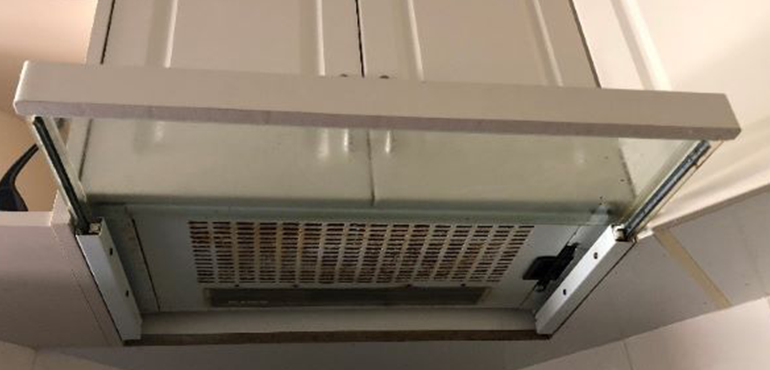
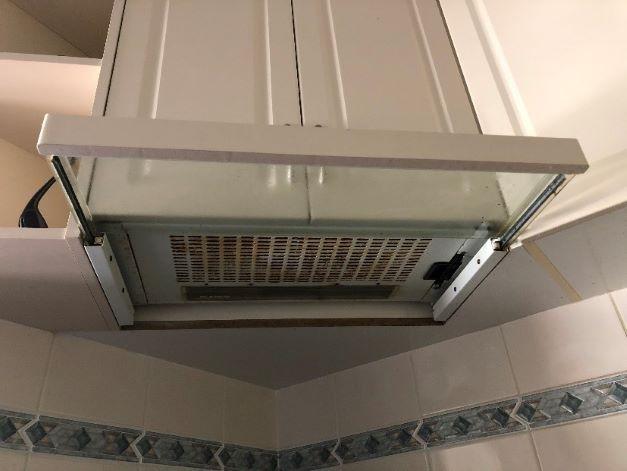
Range hood

A common question builders ask is: What are the venting requirements for domestic kitchen range hoods in Class 1 buildings? In this article, we will inform readers of the purpose and installation requirements of such range hoods and some important issues for consideration.

Image
banner-venting-requirements-range-hood

A typical range hood found in a residential dwelling.

What is the purpose of a range hood?

Range Hoods are primarily installed in a residential dwelling to improve the air quality in a kitchen by capturing and/or discharging things such as water vapour, odours, smoke, grease and other potential pollutants emanating from the use of a cooktop. 

Without a functioning range hood, the discharges mentioned above can spread widely throughout the kitchen and adjoining rooms, resulting in a thin layer of difficult-to-remove grime deposited onto a range of surfaces.

How does a range hood work?

Range hoods generally work on the principle of an electric exhaust fan being located above the cooktop that extracts fumes and pollutants from the cooking area. This is via a filter membrane that catches vapours containing grease and oils. Once filtered, the air is either recirculated back into the kitchen area or discharged to an external air-space. 

Building Code requirements

The Building Code of Australia (BCA) contains no specific mandatory requirement that range hoods need to be installed in a Class 1 building.

What the BCA does require as an acceptable construction practice, is that natural ventilation is provided to any room being occupied by a person. Such natural ventilation can be provided via openable windows, doors or other devices of prescribed sizes relative to the room's floor area.

In circumstances where a window, door or another device cannot be located in a kitchen, the BCA also allows the borrowing of natural ventilation from adjoining rooms.

Installation requirements

Range hoods need to be installed in strict accordance with the product manufacturer's instructions. A determination should be made when entering into a building contract (via the specifications) regarding whether a recirculating or exhaust type range hood installation is required.

Clearly, in cases where a client requires the range hood to be exhausting to outside air, additional costs will be incurred in material, installation costs for ducting, outlets, etc. Some range hoods may even require a more powerful motor to exhaust to a remote location. 

Where to exhaust

Building contractors need to liaise with their clients and relevant suppliers/installers of the kitchen cabinetry and equipment to ensure that the range hood's location will allow for external exhaust if required by the client.

The most practical location to exhaust to outside air would be as close as possible to the range hood itself so that adequate venting can be achieved from the units fan motor. However, that may not always be practical so careful consideration of the exhaust outlet location is essential. 

The practice of venting a range hood exhaust into a ceiling space or wall cavity is not sound. Over time, pollutants such as grease and oil can build up creating a fire hazard along with associated odours and potential damage to insulation and the like.

Maintenance 

The cleaning or replacement of filters in range hoods is arguably one of the most overlooked pieces of routine maintenance required around a domestic dwelling.

If filters are not cleaned or replaced regularly, the range hood's efficiency will be degraded, and filters that are choked with flammable greases or oils become a potential high fire source risk. 

Further considerations

Whilst we have only discussed the issues surrounding range hoods in Class 1 buildings, building contractors are reminded that in other building classes, special requirements apply to range hood installations and the Australian Standard AS 1668.2 - Mechanical ventilation in buildings is referenced by the BCA to ensure a compliant range hood installation standard.


Last reviewed: 19 Feb 2021 Last published: 19 Feb 2021
Back to top